

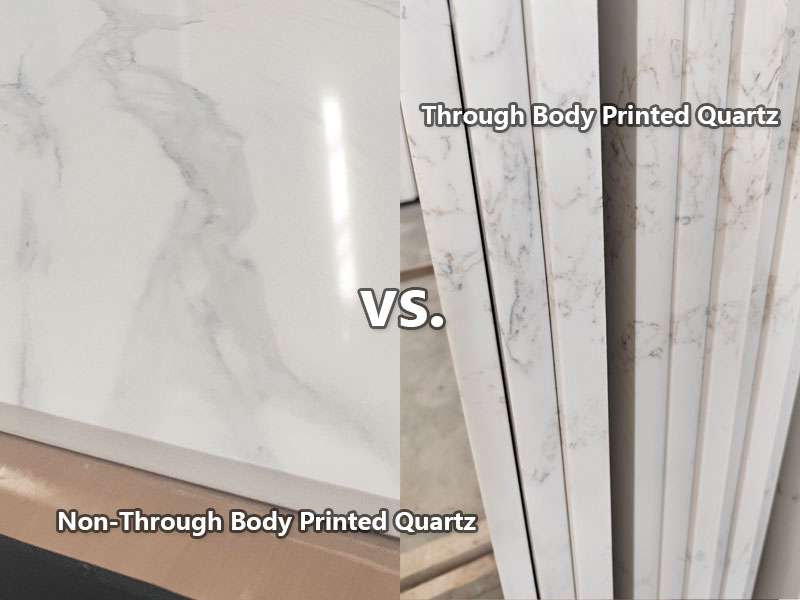
Through-Body Printed Quartz vs. Non–Through-Body Printed Quartz
Artificial quartz stone has become one of the most popular materials for kitchen countertops and interior surfaces. It is manufactured from natural quartz sand, resin, pigments, and other additives through high-temperature and high-pressure processing. Engineered quartz is germ-, stain-, and heat-resistant for modern practicality with a timeless marble look. As the printed quartz industry develops, product quality has become increasingly refined, though noticeable differences still exist among various types of quartz slabs.
There are currently two types of printed quartz in the market,Through Body Printed Quartz versus Non-Through Body Quartz.Here are some differences you need to know before you choose the surface material for your projects.
Manufacturing Differences
In general, the quartz slab processing is similar across manufacturers. The raw materials are mixed, molded, and compacted under pressure using specialized equipments. While production technology and machinery may vary slightly, the core process remains consistent.
The primary difference between Through Body Printed Quartz and Non-Through Body Quartz lies in how the color and veining are distributed throughout the slab during manufacturing.
What Is Through Body Printed Quartz?
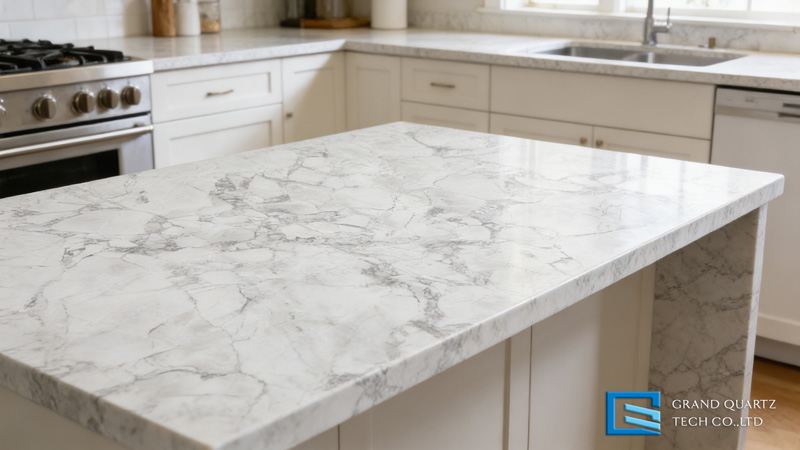
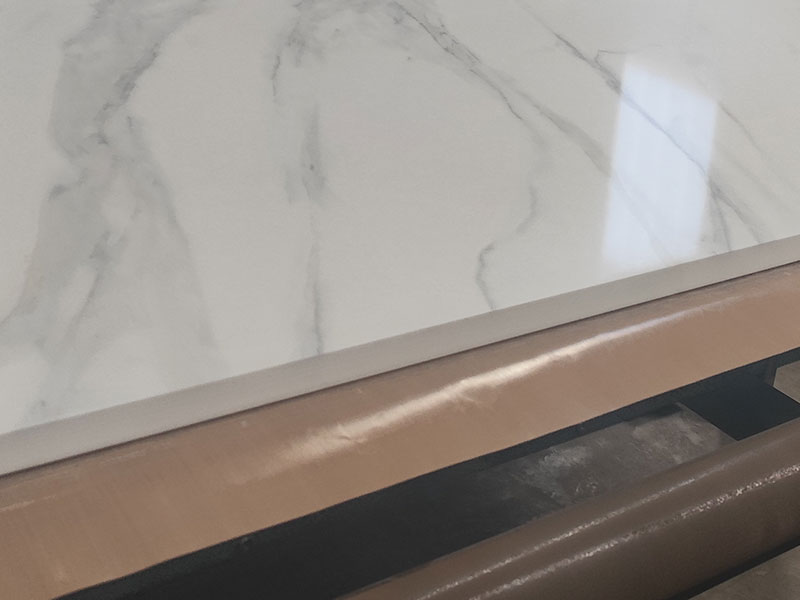
Through Body Printed Quartz is a kind of engineered quartz surface where a digital image or pattern is printed onto or within the quartz slab to mimic the look of natural stone or create custom designs, which means the pattern is visible not only on the surface but along the edges when cutting the slab.
Due to the design running through the whole quartz slab, it closely resembles natural stone. When used for countertops, waterfall islands, or edge profiles, the appearance remains consistent and visually continuous. Even if minor chipping or edge finishing occurs, the internal structure maintains the same aesthetic effect.
What Is Non-Through Body Quartz?
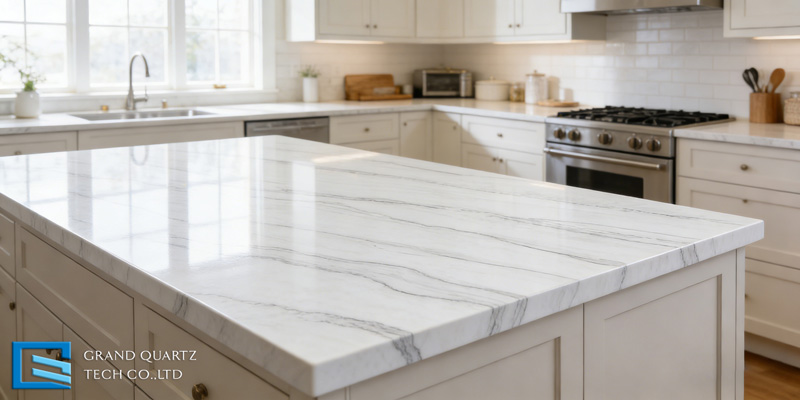
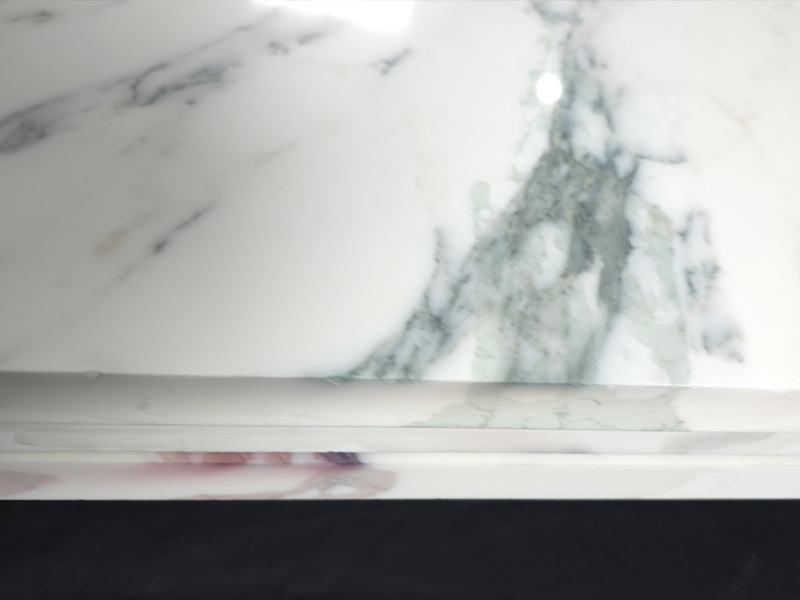
Non-Through Body Quartz features decorative veining and patterns that exist only on the surface layer. The internal structure may appear more uniform or lighter in color. When seen from the side, the contrast between the surface and the core will be noticeable.
While Non-Through Body Quartz offers excellent durability and high performance, the visual consistency may be reduced when edges or corners are exposed.
Which Option Is Better?
 |
 |
If you prioritize aesthetics, require natural stone look surface, or need a waterfall countertop design (where the countertop extends down to the floor on the side), through-body quartz is the best choice.
If you have a limited budget and only need a simple, straight edge finish for your countertop (a well-executed 45-degree seamless joint can also conceal imperfections), non-through-body quartz offers better value for money. The performance is not significantly different from that of through-body quartz.
Our main products include quartz stone slabs, printed quartz, silica-free quartz, warm quartz collections, quartz tiles, quartz countertops, and quartz vanity tops. We also provide customized solutions to meet specific project requirements.
Company News
New Launch
Exhibition
Quartz News
Prodcuts Categories
We Offer Quartz Color Match to Satisfy Customers' Requests See More