



Printed quartz can deliver striking stone looks, but it is not the same as traditional engineered quartz. Here is how the construction, edges, durability, sunlight exposure, repair, and sourcing questions compare.
Quick answer
Printed quartz is engineered quartz with a decorative design applied through digital printing. Traditional quartz is also engineered quartz, but its colors, particles, and veining are created during slab production instead of being added as a separate printed image.
Neither option is automatically better. Printed quartz can offer detailed marble-style patterns, bold movement, and controlled visual effects. Traditional quartz may provide simpler planning for standard edges, cutouts, and everyday applications.
The right choice depends on the exact slab construction, warranty, edge design, UV guidance, and intended use.
What is printed quartz?
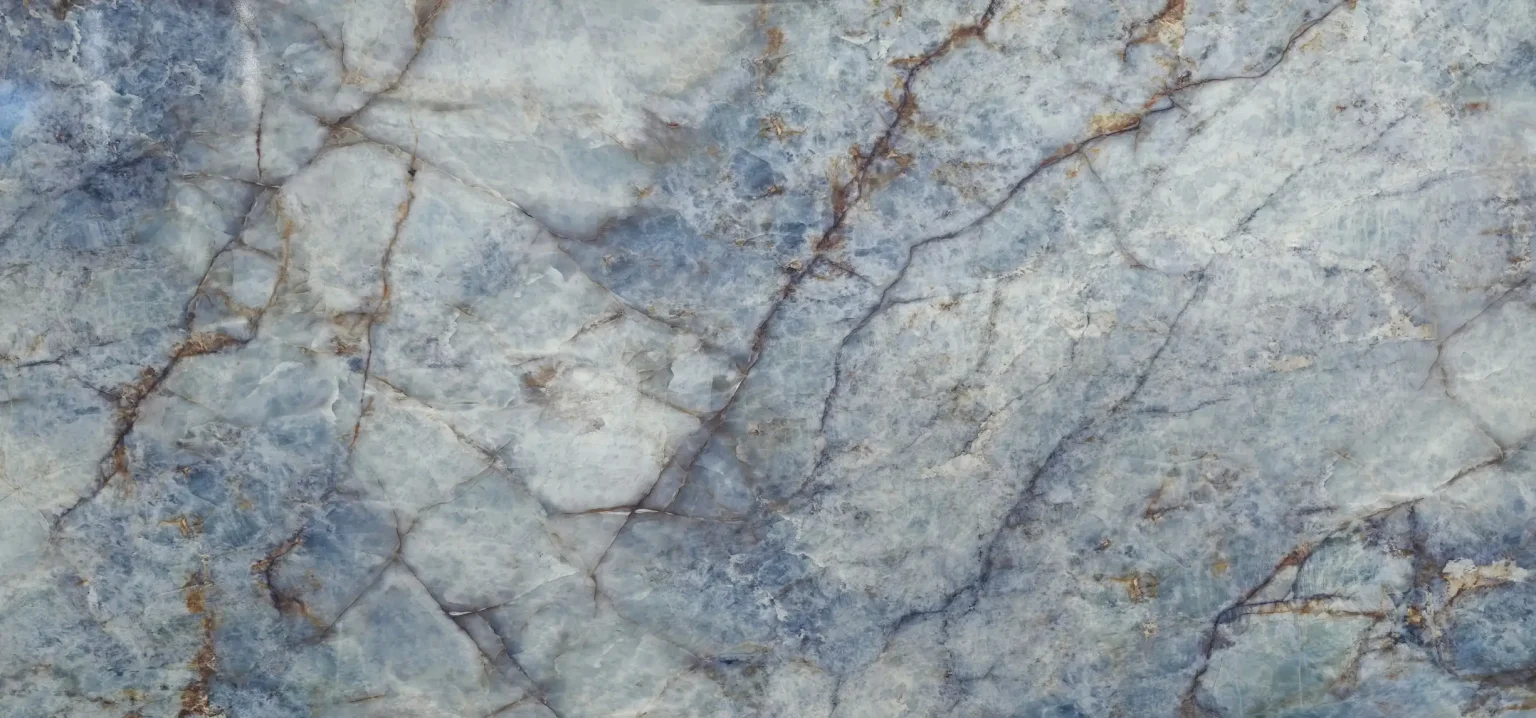
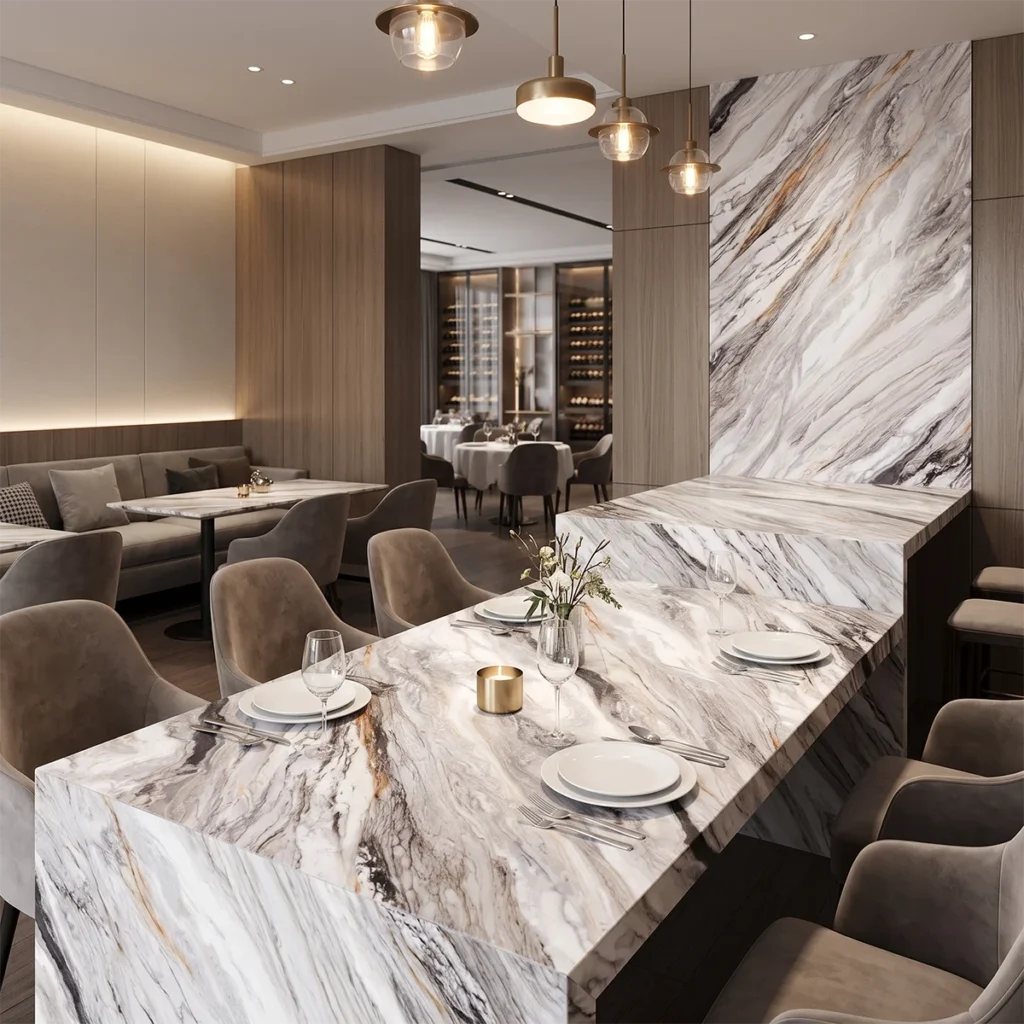
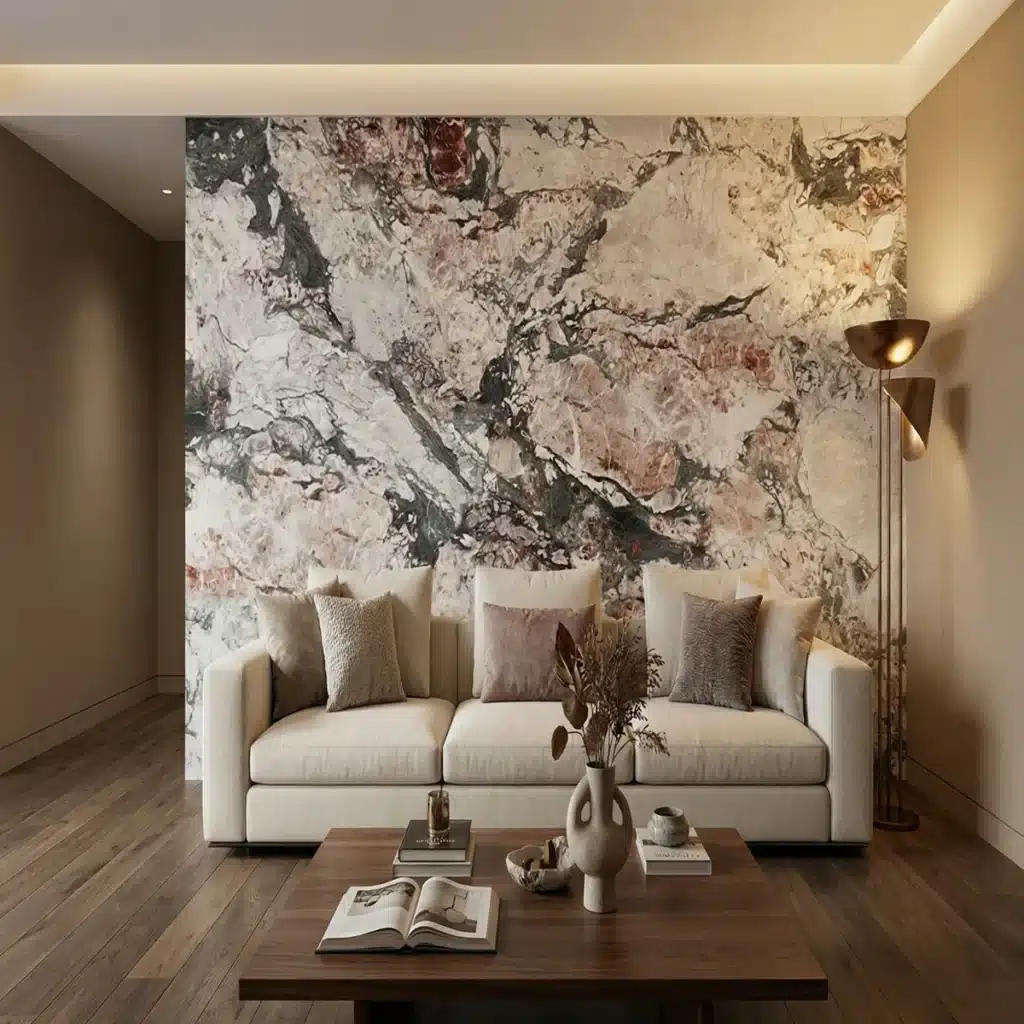
Printed quartz starts with an engineered quartz slab. The manufacturer then applies a digital design to the surface or to a specific decorative layer. The design may imitate marble, quartzite, concrete, bookmatched stone, or another custom pattern.
Printed quartz is not a single, standard product category. Some slabs use surface printing. Others combine a printed design with a colored base or protective finish. Terms such as “full body” or “through-body printed” may also have different meanings between manufacturers. They do not always mean that the exact face pattern continues unchanged through every edge.
Before ordering, ask how the design is constructed and how it will appear at exposed edges, cutouts, seams, and areas that may be chipped or scratched.
Printed quartz is also different from natural quartzite. Quartzite is natural stone formed by geological heat and pressure. Printed quartz is an engineered surface made with a quartz-based slab and a controlled decorative design.
What is traditional quartz?
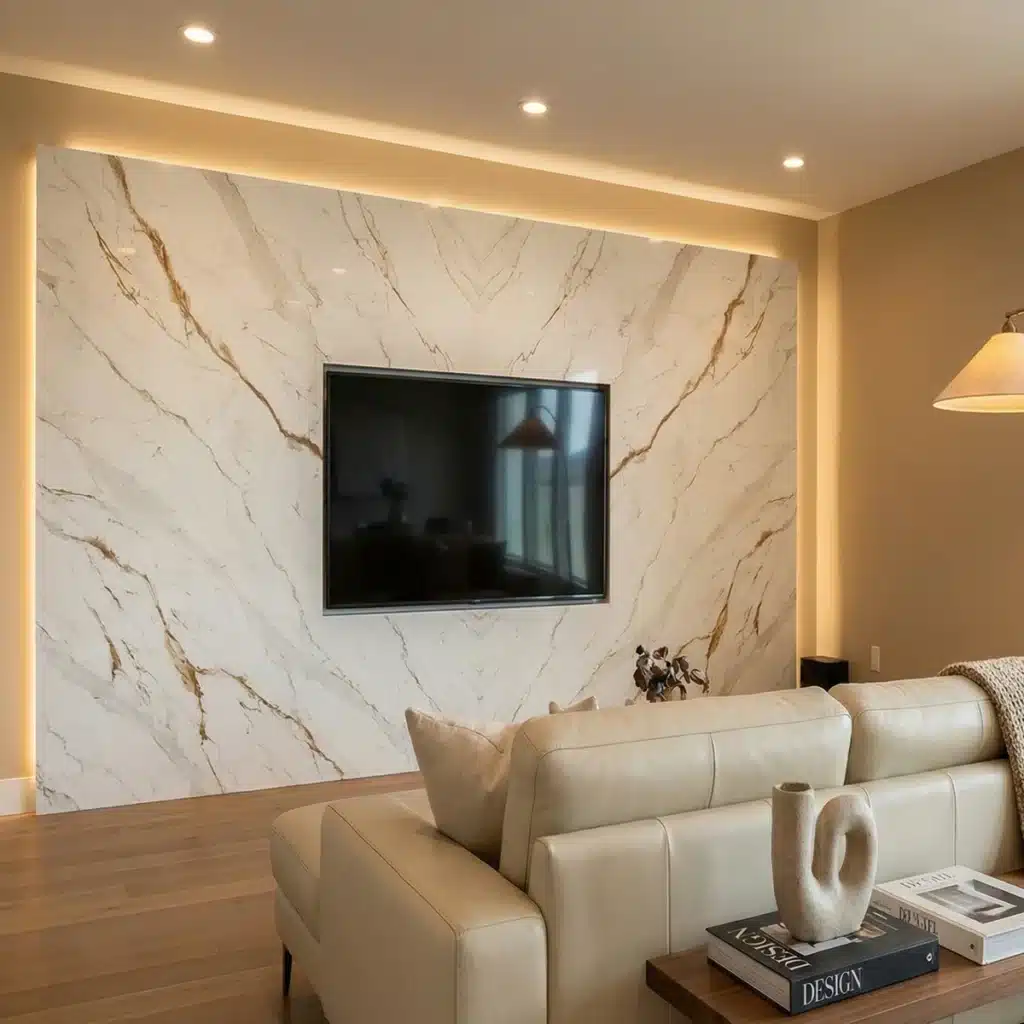
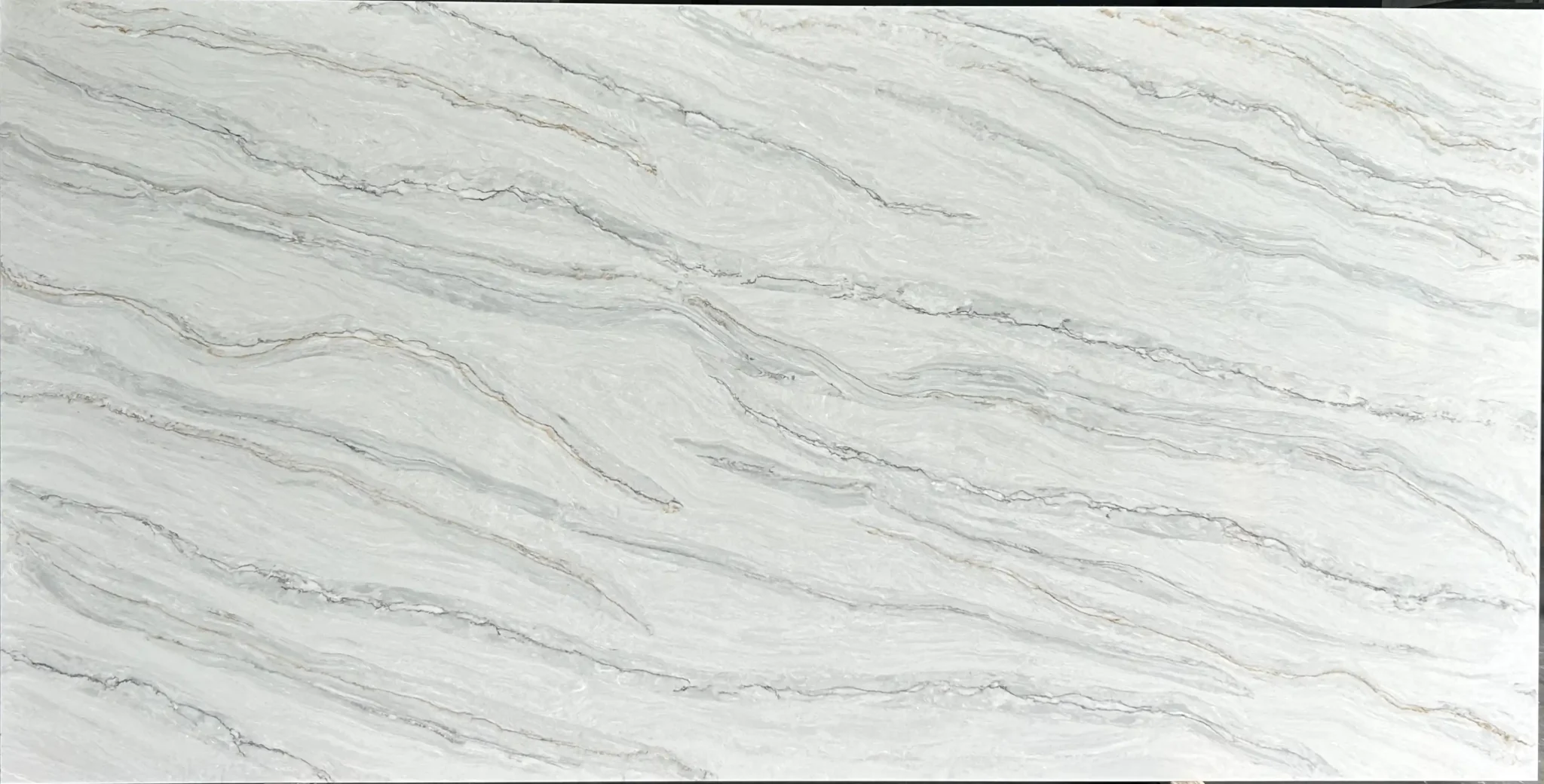
Traditional quartz is made by combining quartz aggregate with resin, pigments, and other materials. The mixture is pressed and cured into slabs. Its color and pattern are formed during this production process rather than printed onto the finished face.
The pattern is not necessarily continuous through the entire slab. Many traditional quartz designs can still look different at an edge than on the surface. However, the color and particles are generally integrated into the slab more than a surface-only image.
This may make traditional quartz easier to plan for common edge profiles, sink cutouts, and standard countertop applications. The result still depends on the selected color, finish, installation, and type of damage.
For broader planning information, visit GrandQuartz Tech’s Quartz Countertops resource.
Printed quartz vs. traditional quartz
| Category | Printed quartz | Traditional quartz |
|---|---|---|
| Construction | Quartz-based slab with a digitally applied decorative design; details vary by product | Quartz aggregate, resin, pigments, and other materials formed into a slab |
| Main appeal | Detailed visuals and controlled pattern placement | Familiar engineered-quartz appearance with many colors and patterns |
| Pattern depth | May be concentrated near the surface; product claims require verification | Usually more integrated, but not necessarily fully through-body |
| Edge appearance | The base color may show on some exposed edges or chips | Often more consistent, depending on the design and slab construction |
| Edge planning | A mitered edge may help continue the face design on selected slabs | Eased, beveled, and mitered edges are commonly used |
| Repairs | Deep damage may affect the decorative layer or reveal the base | Repairs may be easier to match, but results depend on color and damage |
| UV exposure | Review the exact product guidance and warranty | UV performance is also product-specific; outdoor use should not be assumed |
| Maintenance | Usually routine care, with added attention to the decorative finish | Usually routine quartz care, subject to the manufacturer’s instructions |
| Suitable uses | Feature islands, vanities, walls, and design-led interiors | Kitchens, rentals, commercial counters, and projects needing simpler planning |
Durability, Color Stability & Maintenance
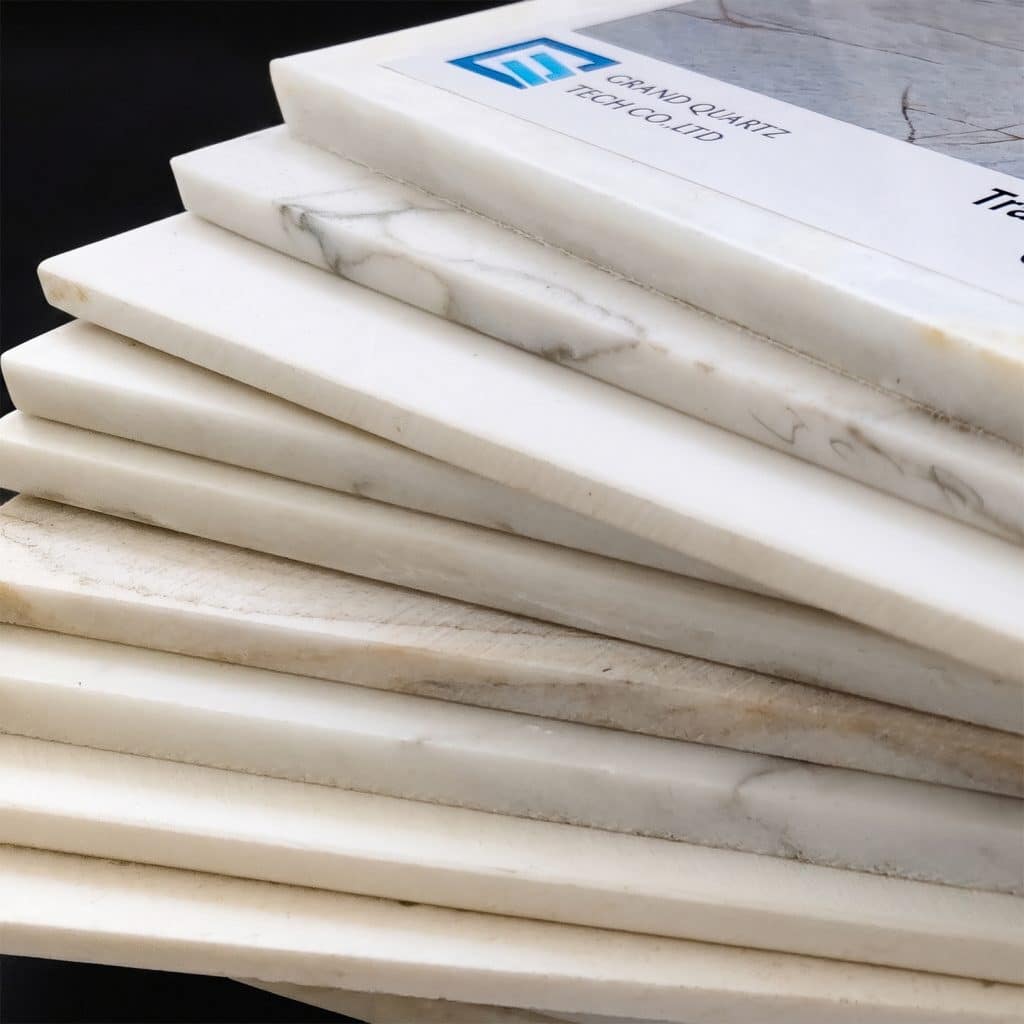
How printed quartz looks at edges and cutouts
The face of a printed slab may look highly realistic, but edges and cutouts can reveal more about its construction.
If the design is mainly near the surface, an exposed edge may show the base material rather than the printed veining. This can affect sink openings, cooktop cutouts, waterfall panels, backsplash returns, and thickened apron edges.
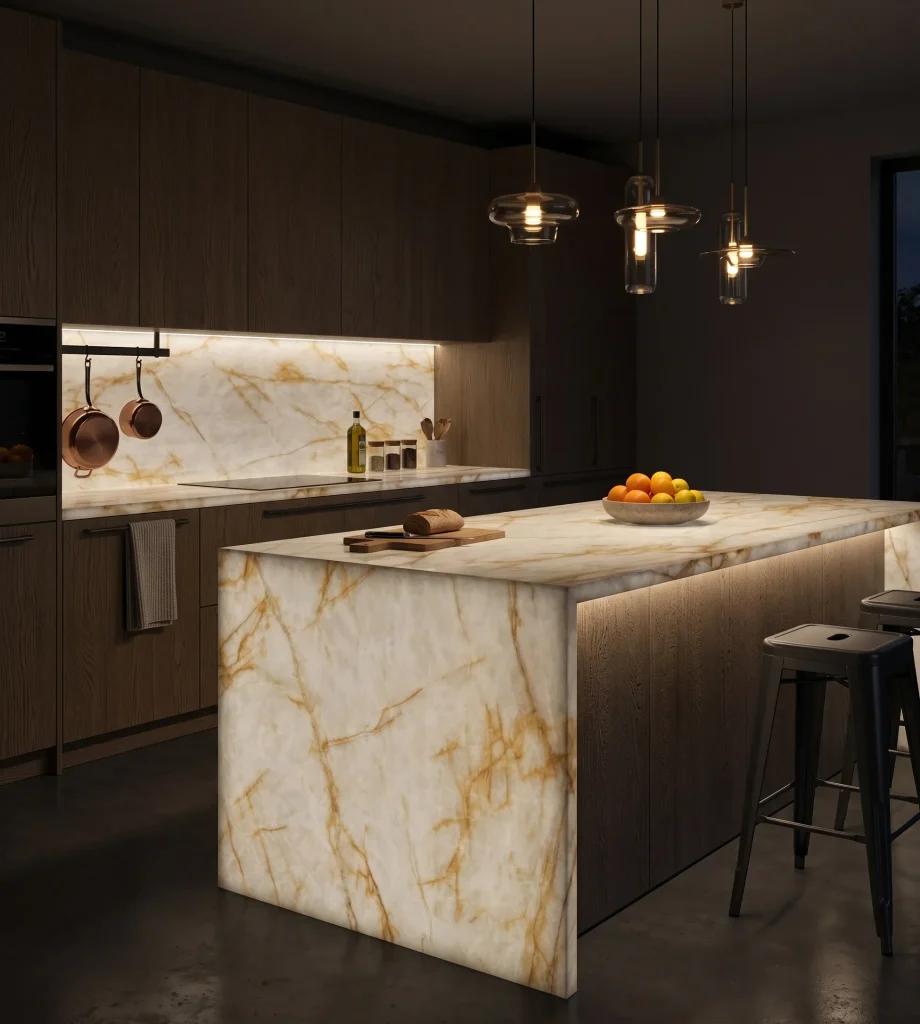
A mitered edge can wrap the face of the slab onto the side. This may create a closer visual match on a waterfall island or thick edge. However, mitered edges add labor, cost, and a seam line. They also require careful pattern planning at corners.
Before approving a printed quartz slab, request:
- Large slab images or a full-slab review under suitable lighting
- A polished edge sample
- A mitered edge sample if a waterfall or thick edge is planned
- A sink cutout or corner detail, when available
- A layout drawing showing seams, backsplashes, and pattern direction
The contractor should confirm these details before cutting the slab.
Durability and everyday use
Both products use an engineered quartz base and may perform well in many indoor countertop applications. However, the quartz base alone does not determine the wear resistance of a printed decorative layer.
For printed quartz, review the protective finish, care instructions, and warranty. A deep scratch or chip that reaches the decorative layer may be harder to blend than damage to a design with more integrated color. A repair may improve the appearance without making the damage invisible.
For either product, use a cutting board and trivets. Avoid heavy impacts, abrasive cleaners, sharp tools, and direct contact with hot cookware. Quartz is durable, but it is not damage-proof.
UV exposure and color stability
Sunlight should be considered for any quartz surface, especially printed quartz. Indoor exposure through windows is different from outdoor use, but strong or prolonged sunlight may affect some products.
Ask the manufacturer for written guidance covering:
- Indoor UV exposure
- Color stability
- Fading or yellowing exclusions
- Warranty limitations
Keep the product indoors. For kitchens with large windows, review the warranty for the exact slab before purchase.View complete maintenance guide
Maintenance and repair
Many quartz surfaces can be cleaned with a soft cloth, water, and mild dish soap. Wipe spills promptly, especially coffee, wine, oil, citrus, vinegar, and strongly colored foods.
Unless the manufacturer approves them, avoid:
- Abrasive powders and scouring pads
- Oven cleaner and paint stripper
- Strong solvents
- Routine polishing compounds
- Direct contact with hot pans
- Cutting directly on the countertop
Printed quartz deserves extra care around anything that could dull, cut, or wear the decorative finish. Minor marks may clean away, while deep scratches and chips may need professional evaluation.
Cost and total installed value
Compare the full installed cost, not only the slab price. Printed quartz may require more layout planning, selective slab placement, pattern matching, mitered edges, or additional material to manage seams and waste.
Traditional quartz may be simpler to source and install when repeatability is more important than dramatic veining. It is not automatically less expensive. Labor, availability, thickness, edge details, delivery, and installation conditions all affect the final price.
Request the same scope for both materials, including:
- Slab quantity and thickness
- Edge profile
- Sink and cooktop cutouts
- Backsplash requirements
- Seam locations
- Delivery and installation
- Pattern layout and waste assumptions
Decision guide
Choose printed quartz if
You want a specific, high-definition stone appearance; the product documents support the intended use; and the design has manageable edges, cutouts, and seams. It can be a strong choice when the surface is a major design feature.
Choose traditional quartz if
You want a familiar engineered surface with simpler edge planning and fewer uncertainties around pattern depth and repair expectations. It may be the better default when practical performance and straightforward installation are the priorities.
When printed quartz may make sense
Printed quartz may suit a project when the visual goal is specific and the technical documentation supports the application. Potential uses include:
- Statement kitchen islands with uncomplicated edges
- Waterfall islands with planned miter work
- Bathroom vanities with light to moderate use
- Full-height backsplashes
- Feature walls and reception desks
- Design-led interiors with controlled lighting
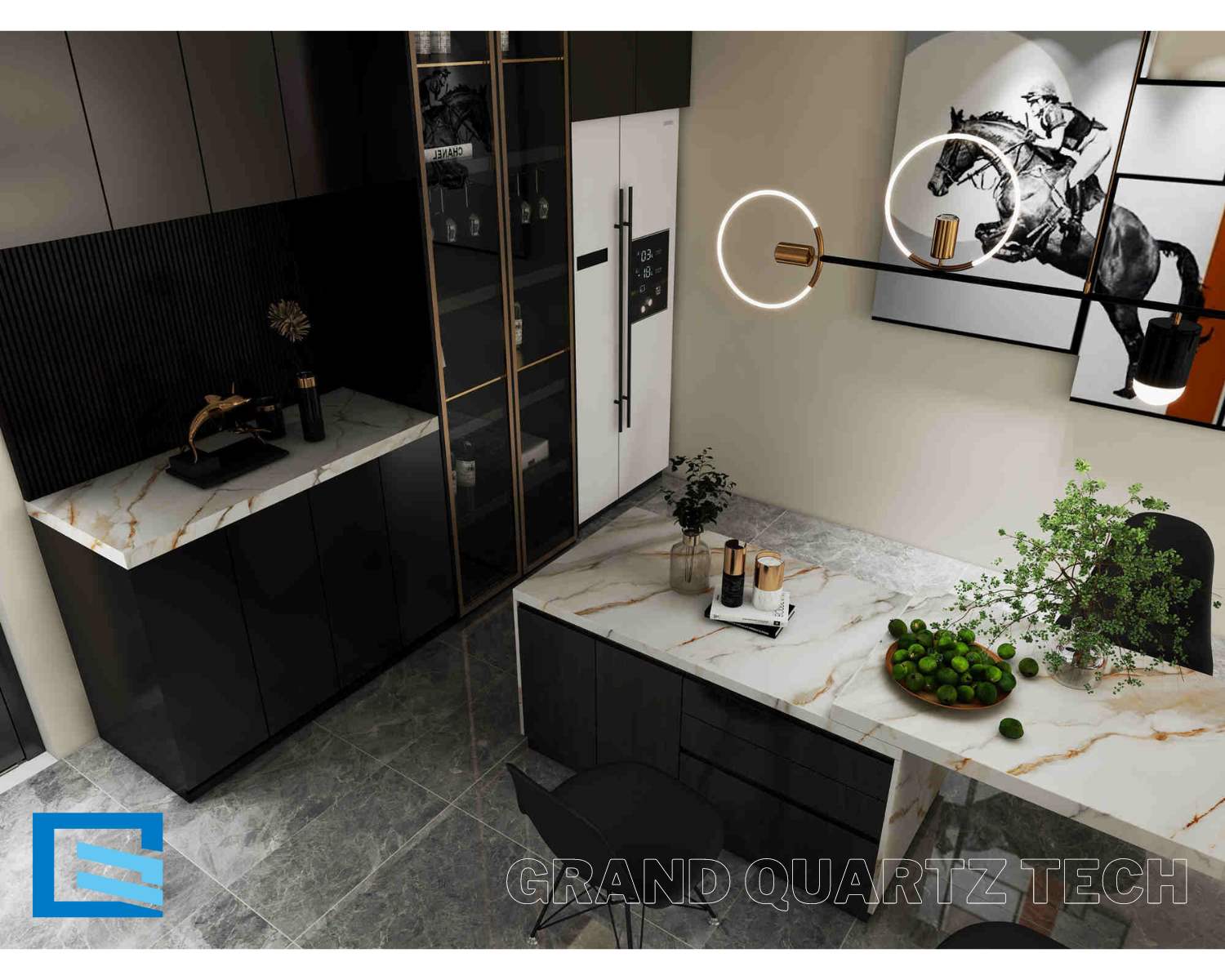
GrandQuartz Tech lists options such as Calacatta Gold Printed Quartz GQ-R0213 and Calacatta Gold Full Body Printed Quartz GQ-R0220. These may suit a project seeking a white-and-gold stone appearance.
Review current slab images, construction details, finish, warranty, edge behavior, and exposure guidance before ordering. Do not approve a product from its name or sample alone.
When traditional quartz may be the better choice
Traditional quartz may be a better default when a project needs familiar installation practices, straightforward sourcing, or several exposed edges and cutouts. It may suit busy kitchens, rental properties, and commercial counters where practical planning is more important than maximum visual realism.
The final decision should still be based on the selected color, finish, slab availability, warranty, and contractor’s installation plan.
Frequently asked questions
Printed quartz uses an engineered quartz base. Its main difference is that the decorative design is applied through a printing process.
Not in every situation. Printed quartz may offer more controlled visual realism, while traditional quartz may be easier to plan for standard edges, repairs, and everyday use.
Performance depends on the product, finish, exposure, and warranty. Request written UV and color-stability guidance before purchase.
Some damage can be improved, but deep scratches or chips may expose the base or affect the printed layer. Ask about repair procedures before approving the material.
Not always. A mitered edge may improve the appearance of selected designs when the base color contrasts with the face pattern.
Many engineered quartz surfaces do not require sealing. Follow the care instructions for the exact product.
Only when the manufacturer approves outdoor use in writing. Without clear documentation, keep the product indoors.